
How Greenline Increased Yields by 30% with Under-Canopy Lighting
Indoor cannabis cultivation is constantly evolving as growers refine their lighting strategies to maximize plant performance. At Greenline, we recently implemented a lighting upgrade that produced one of our most significant cultivation improvements to date: a 30% increase in yields.
The key change was integrating under-canopy lighting into our grow rooms while continuing to use Fohse A3i LED fixtures as our primary overhead light source.
By combining high-intensity top lighting with targeted lighting beneath the canopy, we were able to dramatically improve light distribution throughout the plant — unlocking growth potential that would otherwise go unused.
Our Lighting Foundation: Fohse A3i, M1 & M2 LED Grow Lights
Our grow rooms are built around Fohse brand A3i, M1, and M2 LED grow lights, which serve as the primary lighting system for the flowering cycle.
The Fohse fixtures provide the intensity and spectrum needed to drive high-performance indoor cultivation. Some of the reasons we rely on the Fohse platform include:
High photon output capable of supporting aggressive PPFD levels
Uniform canopy coverage across large grow rooms
Energy-efficient LED technology for large-scale cultivation
Reliable thermal performance that minimizes heat load
With the A3i system, our upper canopy development was already strong. However, like many indoor cultivation facilities, we noticed that light penetration below the top canopy remained a limiting factor.
Even powerful overhead LEDs can struggle to deliver adequate light to the lower and interior parts of dense cannabis plants.
The Challenge: Light Penetration in Dense Canopies
As cannabis plants mature during flowering, the canopy becomes thicker and more complex. Upper fan leaves capture the majority of overhead light, leaving lower bud sites with reduced access to usable photons.
This common cultivation challenge often leads to:
Smaller buds in the lower canopy
Reduced density in interior flower sites
Increased production of “smalls”
Lost yield potential from lower branches
While increasing overhead intensity can help to some degree, it often doesn’t fully solve the problem of light distribution throughout the plant.
To address this, we looked toward layered lighting strategies.
The Solution: Adding Under-Canopy Lighting from California LightWorks
To improve lower canopy performance, Greenline added California LightWorks Megadrive UnderCanopy LED lighting to our grow rooms.
These fixtures are installed beneath the plant canopy, directing light horizontally and upward into areas that overhead lighting cannot effectively reach.
This strategy allows us to illuminate bud sites that would otherwise remain shaded.
Key benefits of under-canopy lighting include:
Improved Light Distribution
Under-canopy fixtures deliver photons directly to lower bud sites, balancing the light environment throughout the plant.
Increased Photosynthetic Activity
Instead of only the top canopy actively photosynthesizing, a much larger portion of the plant becomes productive.
Better Bud Development
With additional light reaching the interior and lower branches, we see:
Larger flowers
Improved density
More uniform bud structure
Higher Yield Efficiency
By activating more flower sites across each plant, we are able to increase total harvest weight without increasing plant count or room size.
The Results: 30% Higher Cannabis Yields
After integrating California LightWorks under-canopy lighting alongside our Fohse A3i overhead LEDs, the improvement was immediately noticeable.
Across multiple harvest cycles, we observed:
Up to 30% yield increases
More uniform bud development throughout the canopy
Improved density in lower branches
Reduced wasted plant biomass
Instead of relying primarily on top colas to drive production, more of the plant is now contributing to overall flower yield.
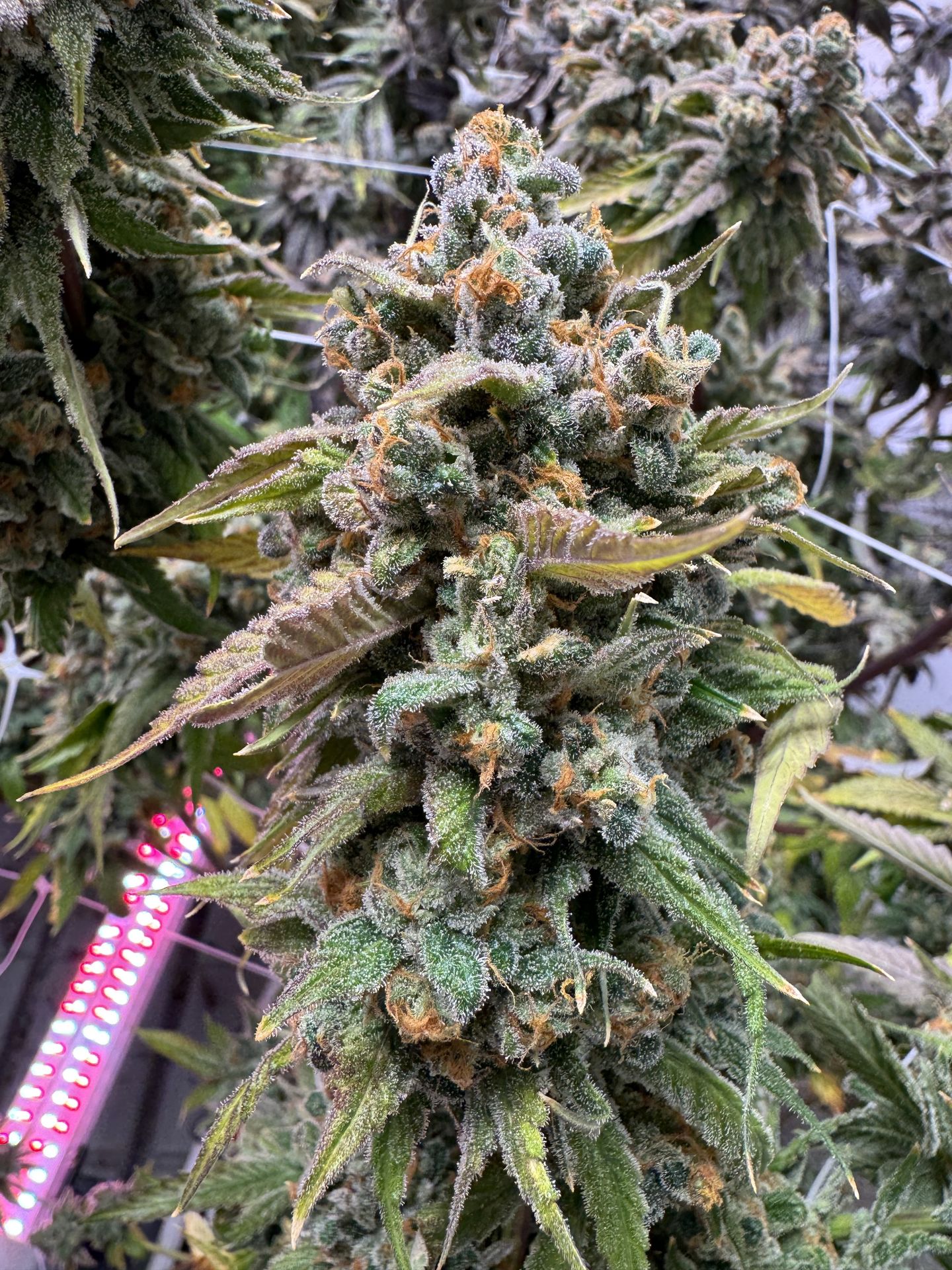
"Alien Sweet Treats" nearing the end of it's cycle.
An Unexpected Benefit: Almost No Smalls
One of the most interesting outcomes of adding under-canopy lighting has been the dramatic improvement in lower canopy bud quality.
Historically, the lower parts of the plant produce smaller, less dense buds that are categorized as smalls. Many cannabis brands design packaging formats around this reality - as did we.
However, after implementing under-canopy lighting, we’ve seen far fewer small buds in our harvests.
The additional light reaching lower flower sites allows them to develop into dense, full-size buds comparable to those higher in the canopy.
In fact, we’ve reached a point where we have almost eliminated smalls entirely in some harvests.
Interestingly, this created a new operational challenge. Greenline offers several packaging SKUs that are designed for smaller buds — including our 1/16 oz "Teenths" and our full flower pre-rolls.
Because our plants are now producing consistently larger flowers throughout the canopy, we’ve actually had to break down larger nugs to fill these smaller-packaging SKUs.
While unusual, it’s ultimately a sign that our cultivation environment is performing at a much higher level.
Why Layered Lighting Is the Future of Indoor Cultivation
This experience reinforced an important lesson for modern indoor growers: layered lighting systems outperform single-source lighting setups.
At Greenline, our lighting approach now combines:
Fohse A3i LED grow lights for high-intensity overhead lighting
California LightWorks Megadrive UnderCanopy lighting to illuminate lower bud sites
Together, these systems create a balanced light environment that supports photosynthesis across the entire plant structure.
Optimizing Cannabis Cultivation with Advanced LED Lighting
As indoor cannabis cultivation continues to mature, technologies like under-canopy lighting are helping growers unlock new levels of efficiency.
For Greenline, adding under-canopy LEDs alongside our Fohse A3i lighting system delivered measurable results:
30% higher yields
More consistent flower size
Nearly zero smalls
Improved overall canopy productivity
By focusing not just on intensity but on light distribution throughout the plant, we’ve been able to maximize the performance of every square foot of our grow rooms.
And as we continue refining our cultivation techniques, layered lighting will remain a core part of our strategy.